The truth about UFOs:

Mistel: Hollow Charged

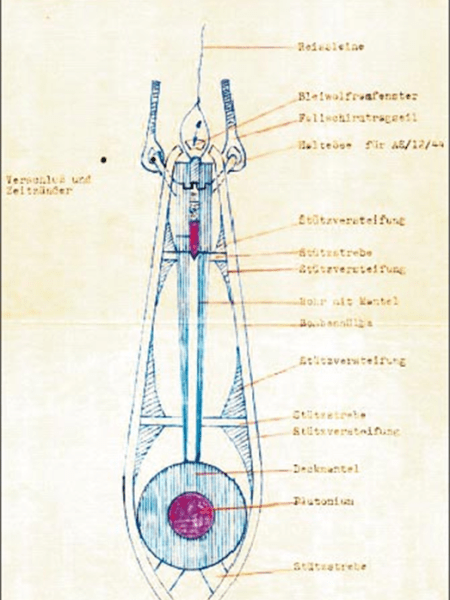
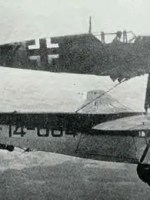
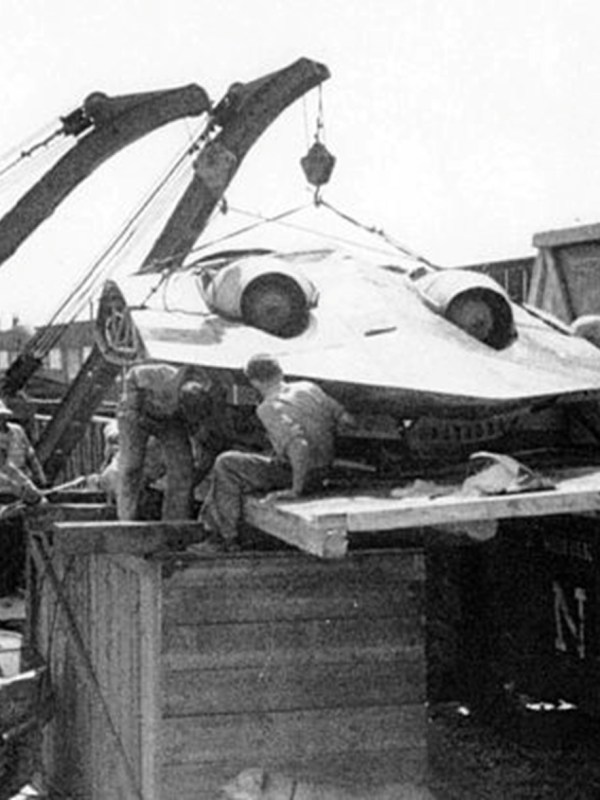
During the war, the Germans came up with a revolutionary way of defeating enemy armor, by use of a hollow charged warhead. While most people are familiar with seeing this t4chonlogy on the Panzer Faust, it can also be seen on mistels, with a system being designed to carry a 7,700 pounds bomb. This was…
Mistel: The Guided Bomb

In 1941, a test pilot from Junkers, names Siegfried Holzbauer proposed the idea of having a mistel in the combination of a fighter and an unmanned bomber, with the bomber aircraft being filled with explosives. This weapon was designed to attack larger targets, like allied ships. When the idea was first introduced, it was dismissed…

Mistel: The Glider

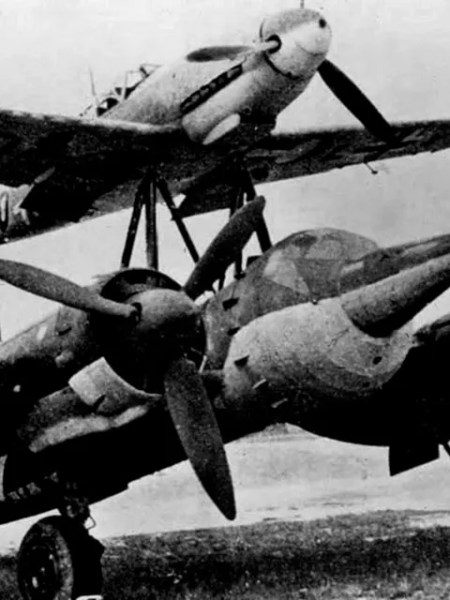
During WW2 the Germans, built many bizarre flying contraptions. 1941 the Germans started experimenting with new types of gliders. One of them was known a “Mistel.” This was a configuration where two aircraft were combined together: with one smaller one, on top of a bigger craft. Originally this system was used to transport gliders, at…

Area 51

While a lot of technology was captured from Germany, by the Americans, it was taken to a secret location. While the science prisoners were taken to New Castle Army Airfield near Wilmington, Delaware, other pieces of German technology were being shipped to other places. With one of these places being Groom Lake Nevada, which would…

The Rise of the Order

With the war raging, and Germany creating technologies that other countries couldn’t even dream of, the SS started organizing themselves to place themselves in a position to be masters of the world with a combination of their expertise in politics, mysticism, and combine sciences. With the war slowly turning against them, the SS looked for…

Martians from Italy

In 1941, America and Italy had tensions, even though America was not in the War against Italy yet. During this year, Mussolini gave a speech stating how America “care more about attack from ‘Martians’ (extra-terrestrial civilization which could land on Earth in the crafts that people have never seen), than about the Axis forces“. At…

Schauberger’s Scientific Quotes

These are some quotes from Viktor Schauberger, depicting the relationship he saw in nature, that he was able to utilize in his scientific devices. Nature is not served by rigid laws, but by rhythmical, reciprocal processes. Nature uses none of the preconditions of the chemist or the physicist for the purposes of evolution. Nature excludes…

Repulsin B

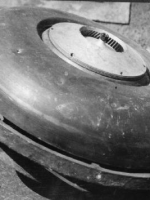
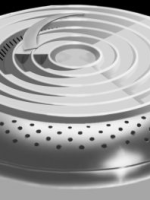
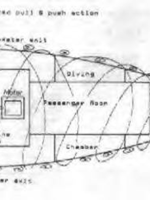
The Repulsin B was a model of vortex motor, with implosion technology. The Repulsin B had two membranes. The top membrane was fixed while the bottom membrane rotated at very high speeds. The turdine inside consisted of 120 blades, which cause something known as an “implosion” inside the vortex chamber. This produced thrust, which was…

Repulsin A

At Mauthausen, Schauberger was ordered by Himmler to carry out research at the concentration camp, with the help of the SS. He was given around two dozen skilled prisoners to work with. Some of these research experiments involved the use of atomic energy making them extremely dangerous, luckily prisoners were replaceable. Schauberger and his team…

Heinkel Taifun

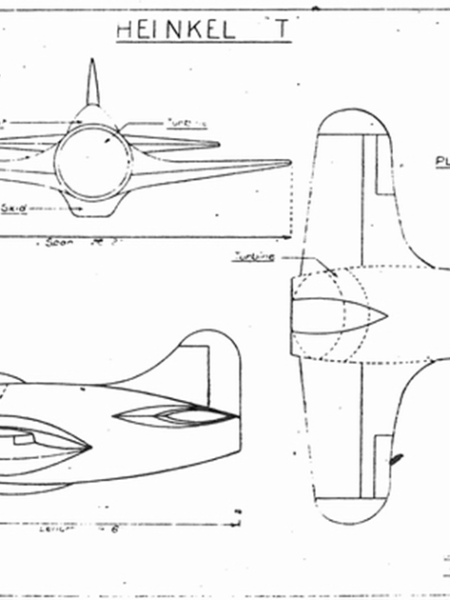
Heinkel Taifun (Typhoon) or the Heinkel T was a design of aircraft that ran off of Schauberger Repulsin vortex motor. Notice haw this aircraft is shaped like a 1950’s fighter, like a Mig-15, but has a totally different design, for the turbine system. Unlike a conventional aircraft there are no axel flow turbojet engine or…

Viktor Schauberger

Viktor Schauberger was an Austrian forester, who spent much of his time studying nature. In his studies involving nature, Vicktor would normally look for patterns, especially in the way water flowed. This man became very smart, spending much of his time learning about agriculture, forestry, nature, and water engineering. In 1934 Viktor Schauberger met Adolf…

RFZ-6

In 1935 Germany had started working the Triebwerk drive for the Haunebu I, base off the H-Great. It was completed in 1939. The following year, in 1940 the RFZ-6 was developed, and would be flown and tested for 2 years. During this time, it helped lead to the design of the RFZ-7.

Bruno Schwenteit: Electro-Turbine Disc Aircraft

This is another design of flying saucer that was put together by Schriever and Miethe. German Patent # 2,147,668 Elektrische-Luft Turbine und Raumschiff German Patent # 2,529,664Flugkörper mit Kombiniertem Elektro-Turbo-Antrieb

Miethe Disc

Miethe Disc Miech invented a very unique design of propulsion system that was based on the work of Karl Nowak. Dr. Nowak was a physician from Austria. Their design involved the use of nitrogen and oxygen, to create hot air needed for propulsion, with a process of oxidizing nitrogen. Both of these necessary elements came…

Miethe Elektrische Luft Turbine V-7

During the early 1940’s Dr. Richard Miethe produced many different Flugscheiben (Flight Disc) designs for the SS in a concentrated effort to improve or replace Rudolf Schriever’s failing disc-fan Flugkreisel prototype. He worked with many other great minds such as Dr. Miethe, Klaus Habermohl, Dr. Giuseppe Belluzzo. One of his main task was to research…

Cancelled Operation Sea Lion and Change of Focus

Operation Sea Lion was a German plan to invade Britain. Unfortunately, it was postponed indefinitely in September 1940, when the Luftwaffe 8-month blitz failed to destroy Britain, along with the German failures on the eastern front. This invasion would require large amount of conventional weaponry, but when Operation Sea Lion was cancelled, the Germans shifted…

Swedish Sightings

During the early 1940’s, there were many UFOs sighting around Germany and Central Europe. There were many documented reports from both civilian and military personnel of sightings of flying metal disks and large flying orbs. From Northern Europe to neutral Sweden, there were many reports of these UFOs. The Swedish Press rightfully referred to these…

Diebner After the War

After the war in 1955 Dr. Diebner patented a two-stage reactor that could breed plutonium. It would use Uranium-235 to achieve a self-sustaining reaction, needed to produce plutonium. This patent did draw up from his war time experiments with the Nazis. Drawing up information from Diebner’s past, we see just how focus the Germans were…

Atomic Distraction

One has to note America put a lot more effort into building their nuclear than Germany did, with 125,000 worker and a cost of 2 billion dollars, it’s easy to see why America was the first to build the weapon. Then later they had their nuclear secrets stollen by multiple Jews and given to Russia…

German Nuclear Program

Asking the question about Germany having a nuclear bomb, during World War Two, can be answered quite conclusively. But as the allies collected Germanies scientist after the war, it became clear the Germans were farther ahead with their nuclear research, than most of the world could believe, with two laboratories operating at the Max Plank…

Haunebu I/RFZ-5

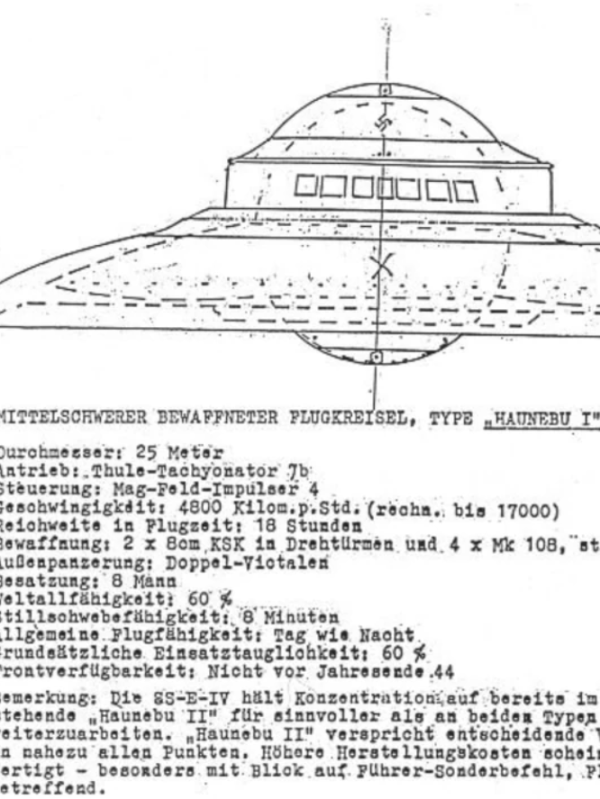
After multiple success tests of miniature propulsion systems and airframes, two full-scale vehicles were put into prototype known as the Haunebu I. The Haunebu I was 81 feet wide, and capable of reaching speeds close to Mach 4. For weaponry, the Haunebu I was fitted with turret containing twin mounted 60mm Kraftstrahlkanone (KSK) energy-beam weapons.…

MK 108 Cannon

The Maschinenkanone (MK) 108 was a short barrel 30-millimeter cannon It was much more powerful than the MG/FF 20mm cannon. To put it into perspective a MG/FF 20mm cannon would need around 20 hits on a B-17, which the MK 108 cannon could do in four hits. Because of its immense power the MK 108…

Kraftstrahlkanone

The Kraftstrahlkanone (KSK) is a focused energy beam, much like laser, although it doesn’t utilize photons. Even though the KSK was viewed as a laser weapon by many, it’s actually a phaser. The KSK used a spherical cascade oscillator to a transmission rod wrapped in a tungsten coil which acts as the “barrel” of the…

Röntgenkanone

The Röntgenkanone was another energy beam weapon, which was funded by Kammler, and designer by Ernst Schiebold, who was Dr. Widerøe rival. The Röntgenkanone use x-ray beams to disable magnetos in target aircraft. While it wouldn’t destroy the craft, it would create situations where the targeted craft would need to fly at lower altitudes, making…

Rheotron

The Rheotron was a weapon that was developed by Max Steenbeck, at Siemens-Schuckert in the 1930’s. It was based on a particle accelerator and was also duplicated by America thanks to Donald Kerst at the University of Illinois in 1940.  However, what the SS managed to do was shrink down the size of a particle…

Advanced Aircraft Energy Weapons

Early disk craft were normally fitted with conventional weapons, but the magnetic forces exerted by these crafts would usually cause the weapons systems to malfunction. This caused the Black Sun research group to develop energy-based weapons, which would run off the aircraft’s own power, for ammo. There were issues with these systems putting too much…

Tachyanotar-7

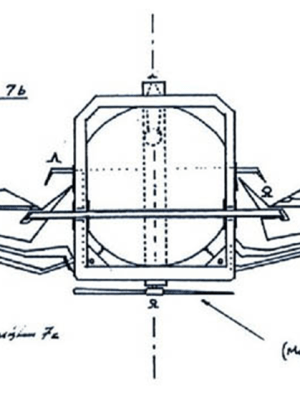
There were many breakthroughs that were achieved while working on the Haunebu craft. One of these biggest inventions was the electromagnetic-gravitic propulsion system titled Tachyonator-7. This propulsion system was capable of pushing a craft up to speeds of Mach 2 and achieving altitudes of 14,000 feet. It also had a ceiling of 40,700 feet. This…

New Fuels

The SS organized a technology development unit, which was task with finding new fuel source, in order to take the Reich off of oil, due to scarcity. Most of their work was focused on inventing different types of engines which could run off different fuels such as grain alcohol. They also did work with studying…

The Haunebu Project

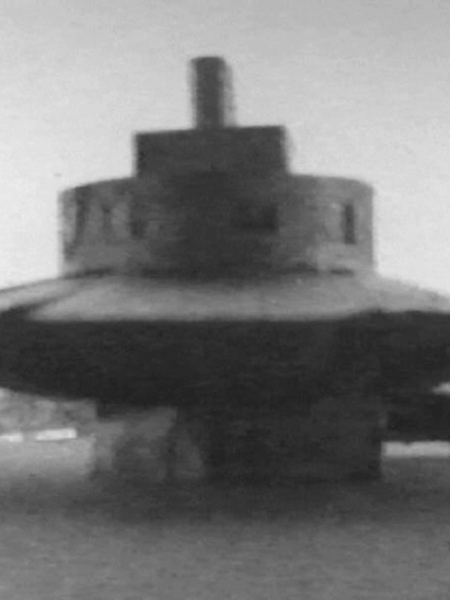
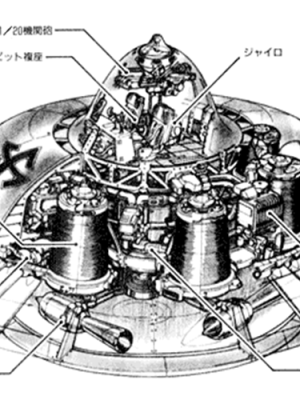
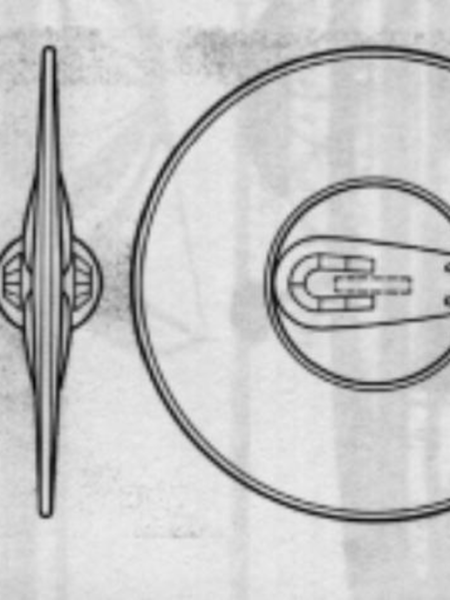
In Prague, Rudolf Schriever and Klaus Habermohl started a project to build a new type of disk shaped known as the Haunebu series. These disk-shaped aircraft had a ring where all the mechanical parts for propulsion were held, and a fixed central cockpit for the crew. These crafts were quick and agile, with the ability…

Something went wrong. Please refresh the page and/or try again.

Contact

← Back

Thank you for your response. ✨