During WW2 the Germans, built many bizarre flying contraptions. 1941 the Germans started experimenting with new types of gliders. One of them was known a “Mistel.” This was a configuration where two aircraft were combined together: with one smaller one, on top of a bigger craft.
Originally this system was used to transport gliders, at the beginning of WW2. This plan was conceived to help land troops behind enemy lines. The mistel’s glider would be filled with 10 soldiers, utilizing a DFS 230 Assault glider with a Focke Wulf Fw 56 on top as tow plane. Fritz Stamer initiated the gliders first series of trials.
This system worked well, especially in adverse weather conditions, when towing a glider by a cable would be too unstable in high winds. Unfortunately, it would be a very slow craft, with a top speed of 235mph. This made it very easy for modern aircraft to take these down, but that didn’t stop the Germans from experimenting.
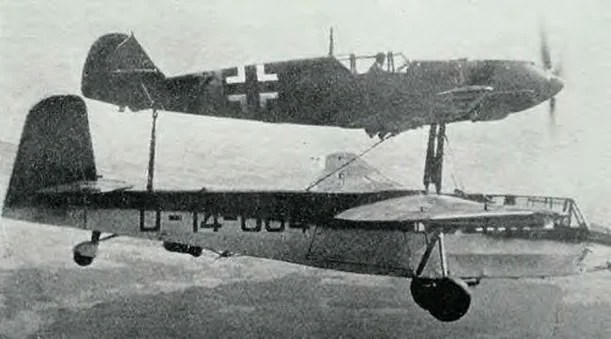
Later, towards the end of the war, many other concepts and designs for Mistels would be built and tested including:
- Ju 88 G-7/Focke Wulf Ta 152H, a single engine aircraft (better known as “the long-nosed Fw 190)
- Focke Wulf Ta 154, a twin engine multi-purpose (Germans attempt for a design similar to the British Mosquito)/Fw 190
- Ar 234/ Fi 103
- Do 217K, a twin engine bomber (advanced version of the “flying pencil”)/ DFS 288. a high altitude reconnaissance aircraft (using a Walter rocket engine)
- Si 204, a twin engine light transport monoplane with two vertical tails, each at the end of the horizontal tail surface. / Lippisch DM-1.
- There were many projects, such as the Ju 287/ Me 262 and Ar 234C/ Arado E377 (small pilot less bomber) and the Führungsmashine (Ju 88H-4/ Fw 190 A-8) intended as a long-range pathfinder. The upper component in this case was purely an escort.
Throughout the war 250 mistels would be made.


Leave a Reply