Epp would be inspired to design a new craft in 1940, known as the Omega Diskus, which combined rotor fan technology on his old design, and ram jets powered by a fan. This craft would be built in secret at the Skoda factory in Prague, starting in 1943. There were some problems with the flying saucer. Another research team modify Epp’s design, and by February 1945, the first test flight was completed.
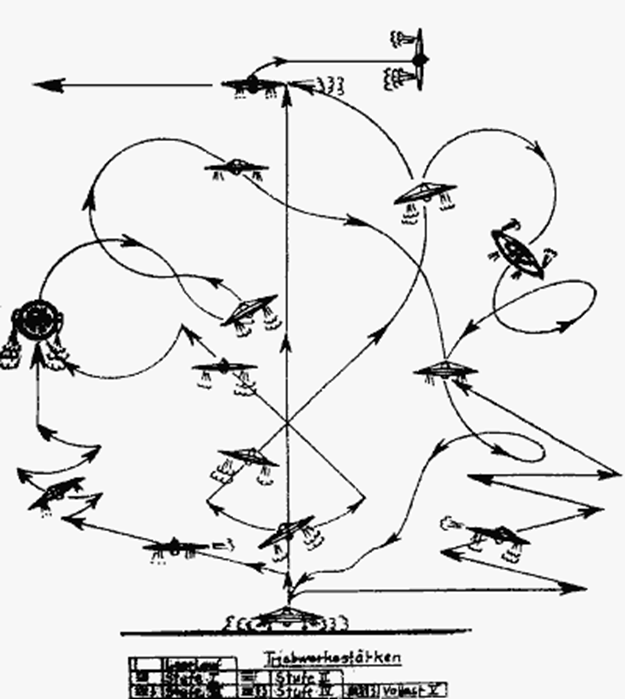
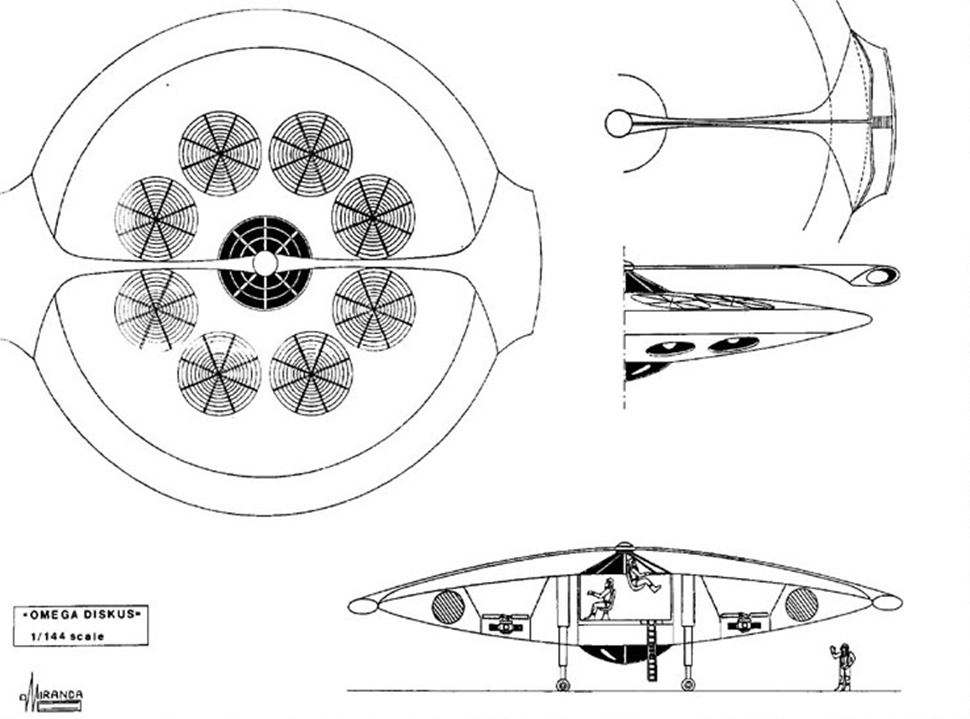
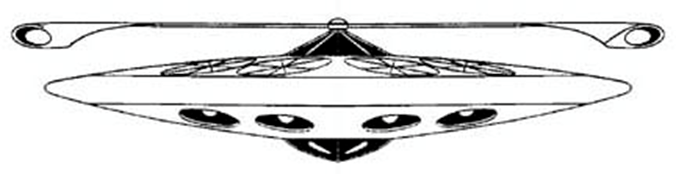
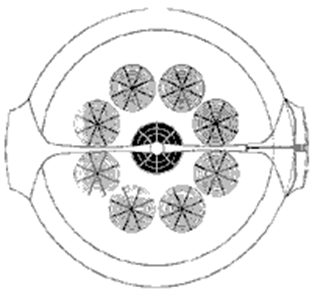
This craft would use the Coanda Effect to achieve lift. This craft had a 4-meter-wide cockpit, surrounded by a 19-meter-wide disk, which housed eight fans. Each of these fans had their own 80 hp motor, housed in a 3-meter duct. On the top of the craft, there was a rotor system would have a Pabst ram jets at the tip of each blade, similar to Focke-Wulf Triebflügel, they would spin the rotors at 220 rpms.
The rotor blade would measure 22 meters long, with variable pitch. The duct fan would cancel out any conflicting forces caused by the main rotor, unlike a conventional helicopter, which uses a tail with a rotor. The ram jets on the propeller also made it possible to point them in both in the same direction and use them for highspeed flight. During landing and low speed maneuvers the ramjets would be cut, or if the pilot wanted the craft to fly using duct fans. While close to the ground, this craft would have better handling, thanks to the ground effect, just like other vehicles shaped the same way, similar to the Avro car. However, Epp thought his craft was powerful enough to car an atomic bomb for the Nazis when they built it.
To start building this craft Epp was given a place to work at the Skoda factory. During World War 2, four 1/10th scale models were made, but these models were only used for aerodynamic testing. No fully functional model was ever produced by the Germans. However, there are rumors that Josef Epp was involved in the creation of other types of disk crafts as well.
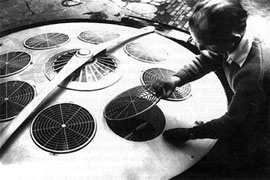
At the end of World War 2 Epp tried to interest the allies in the Omega disk, for a chance to join their team, like von Braun did with operation paperclip, but couldn’t. Instead Epp was stuck in East Germany, where he went to work, with other members of the Junkers team, to build jets for the Soviets. One of these projects that Epp worked on for the Soviets was the EF-150 jet bomber.
 UFOs are From
Leave a comment