Von Braun and the Rocket Society weren’t the only people developing rockets for space flight. Eugen Saenger was another great mind as well, maybe even more so than Von Braun. Von Braun was building simple ballistic vehicles, while Saenger spent his time studying space faring vehicles like shuttles. Even the rocket engines that Saenger built, used different fuels compared to what the V-2 and other Aggregats series rockets used.
Saenger was born in 1905, in the Czech Republic. Early on in life Saenger studied civil engineering in Graz. However, after reading Oberth’s book on manned space flight, Saenger changed his focus in study to space travel. He transferred between schools and started a degree in aeronautics at Technical University in Vienna. Graduating in 1931, his original idea for a thesis on rocket propulsion as a form of space travel was rejected. He was forced to do a thesis on airfoils instead. While in Vienna, he managed to keep writing his piece on space travel. It was published in 1933 under the title “Raketenflugtechnik” (Rocket Flight Engineering. This book was a large leap in terms of rocket theoretics. This book covered everything from rocket planes, space stations, interplanetary travel, and even concepts behind ion engines.
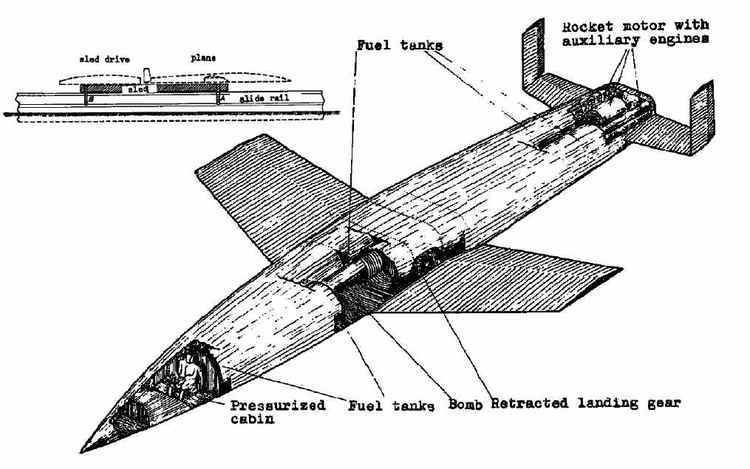
Later that year, Saenger proposes his idea of a space travel plane to the Austrian Army. His idea consisted of a rocket plane, that would be launched by a rocket sled. This sled would have six rocket engines, roughly about the size of a V2 engine each. This sled would accelerate the space plane to a high speed, before the space plane itself would fire it’s own engines, to launch into orbit. The space plane would theoretically travel at Mach 13, with a maximum range of around 5000 km, and an altitude of 50 km. The Austrian military rejected Saengers idea, since they believed rocket engines had too much of an explosive nature. While this is proven to be true, Saenger was undeterred.
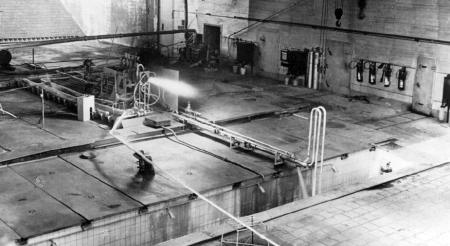
While this feat seems like science fiction, Saenger was already testing a smaller version of the type of engine needed for this space plane. Saengers engines were different from Von Brauns since they utilized Kerosene rather than alcohol as a fuel source. Through 1934 Saenger did many rocket engine test utilizing different fuel addictive. Through his studies, he found out lithium works best for his designs. All of his works were published in his book Neuere Ergebnisse der Rakenflugtechnik (New Possibilities for Rocket Flight Technology). Unfortunately, the dean of Vienna Technische Hochschule decided to ban Saenger from testing rocket engines at the school.
Saenger still worked on his design, testing different nozzle designs and pump. In June of 1935, he got a job work as a writer for Austrian Flight Journal, which gained him much attention by the German high command. In February 1936 he was invited by the Luftwaffe to have funding and a base at Trauen, to work on the Silver Vogel.
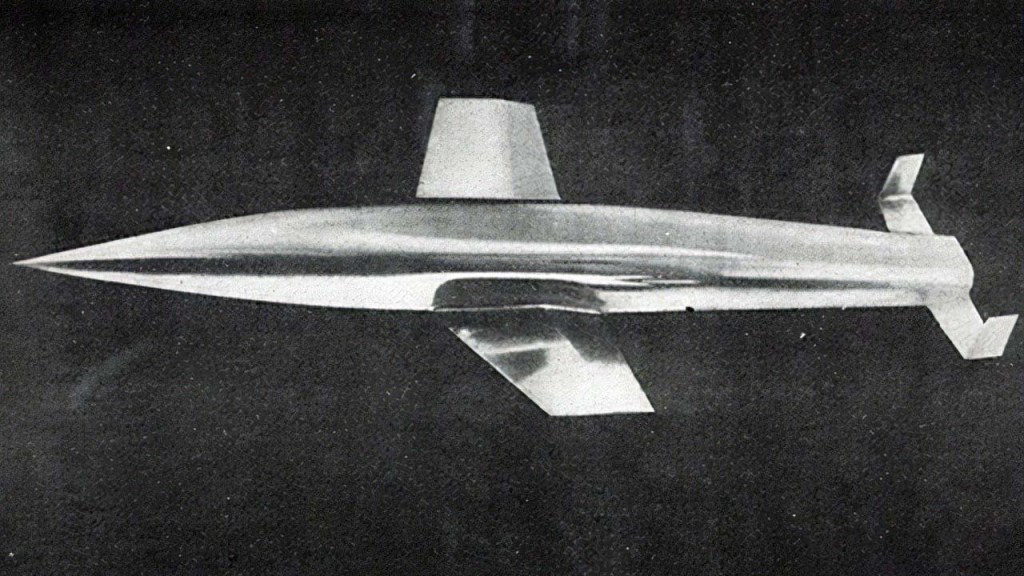
Saenger’s early work did get out to the rest of the world, including America. Saenger’s engine designs and lifting designs were all studied and tested by Caltech in America, while Saenger couldn’t work on his own design on his own. Since word got out before of his potential world changing technologies, the Germans decided to keep Saenger’s work was hidden. The German high command decided to keep Saenger’s team at Trauen and the team at Peenemunde working separately.
After theory and designs were made, it was noted that it would take about 20 years in order to get this type of craft to be operational. This was time that the German high command didn’t feel like they had. They put Saenger to work build ram jets instead like the Škoda-Kauba P14, or the Lippisch P.13a. These engines were being tested from 1939 to 1944. Saenger was forced to focus on from 1942 to 1944, instead of anything else.
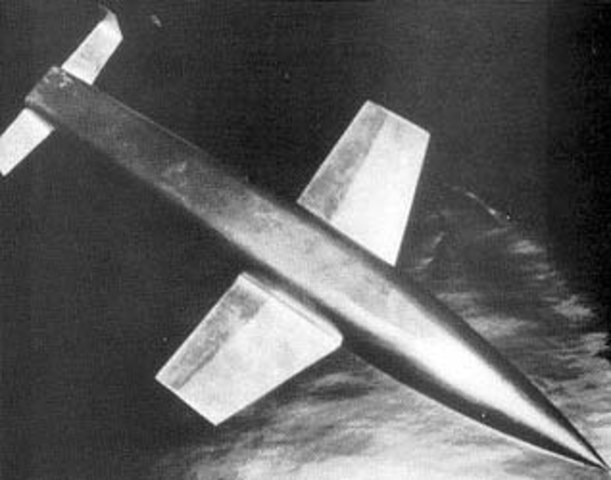
Saenger work was still kept secret, even from Von Braun, until 1940, when Von Braun discovered his work looking a better way to build an ignition system for his own Aggregat rockets. Von Braun and Saenger shared many ideas which would push Von Braun to work with him to put together manned versions of the A-series as well.
It wasn’t until 1944 that the Germans were back interested in the Silver Vogel, but by that time it was too late. Saenger would continue his work post war in France and West Germany. He was just as impactful as Von Braun in the field of space but less famous. It really makes you wonder if the Nazis had even more space programs that were weren’t told about.
 UFOs are From
Leave a comment